Angle Check Valve About
An angle check valve is a type of valve designed to control the flow of fluid or gas in a plumbing or piping system. It features a 90-degree angle configuration, with an inlet and an outlet positioned at right angles to each other. The valve uses a swinging disc or a ball mechanism to allow flow in one direction while preventing backflow in the opposite direction. Angle check valves are commonly made of durable materials such as brass, stainless steel, or PVC, and they are available in various sizes and connection types to suit different applications.
Frequently Asked Questions (FAQ):
Q: What is the purpose of an angle check valve?
A: The main purpose of an angle check valve is to regulate the flow of fluid or gas in a plumbing or piping system while preventing backflow. It allows the flow of media in one direction, opening the valve to enable passage, and automatically closes to block the flow in the opposite direction. Angle check valves are commonly used in applications where preventing backflow is crucial, such as in water supply systems, HVAC systems, irrigation systems, and more.
Q: How does an angle check valve work?
A: An angle check valve operates using a swinging disc or a ball mechanism inside the valve body. When there is pressure or flow in the desired direction, the disc or ball moves away from the seat, allowing fluid or gas to pass through. When there is a reverse flow or backpressure, the disc or ball is forced against the seat, sealing the valve and preventing backflow.
Q: What are the advantages of using an angle check valve?
A: Angle check valves offer several advantages in plumbing and piping systems. They provide protection against backflow, which helps maintain the integrity of the system and prevents contamination. Angle check valves are compact and space-saving due to their 90-degree angle configuration, making them suitable for installations in tight spaces. They are also relatively simple in design, reliable, and require minimal maintenance.
Q: Where are angle check valves typically installed?
A: Angle check valves are commonly installed in various applications, including residential and commercial plumbing systems, industrial processes, water distribution networks, irrigation systems, and more. They are often used in situations where preventing backflow is critical, such as preventing water contamination, protecting pumps, or ensuring the unidirectional flow of fluids or gases.
Q: Can angle check valves be installed in any orientation?
A: Angle check valves are typically designed to be installed in a specific orientation due to their gravity-assisted closure mechanism. The valve body usually includes directional arrows or markings indicating the proper flow direction. It is important to follow the manufacturers instructions and install the angle check valve in the correct orientation for it to function effectively and prevent backflow.
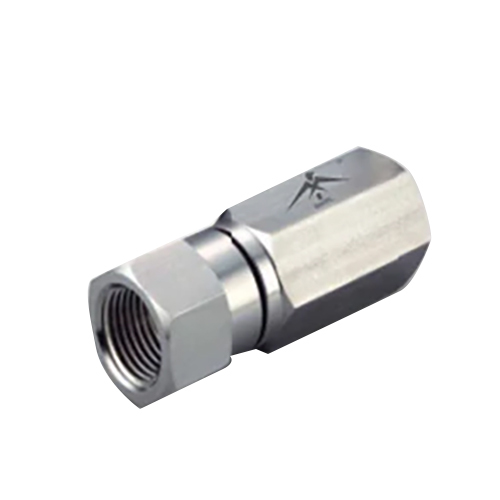
Superior Corrosion ResistanceManufactured using high-grade SS316 stainless steel, this angle check valve offers exceptional resistance against rust and chemical corrosion. The smooth polished finish extends the valves service life even in harsh industrial environments. This durability ensures minimal maintenance and outstanding performance in various fluid applications.
Bubble-Tight Zero Leakage AssuranceWith metal-to-metal sealing and precision engineering, the valve delivers zero leakagealso referred to as bubble-tightperformance. This feature is vital for maintaining system integrity, preventing fluid loss, and ensuring safety in critical fluid flow control operations, whether installed in water, oil, or gas pipelines.
Flexible Installation and Consistent OperationThe valves design supports both horizontal and vertical installation, enhancing its adaptability in diverse piping layouts. Its threaded BSP screwed ends facilitate quick connection, while automatic non-return function prevents backflow, supporting reliable and efficient pipeline operation for industrial users.
FAQs of Angle Check Valve:
Q: How is the Angle Check Valve installed in industrial pipelines?
A: The valve can be installed in both horizontal and vertical positions, using its BSP threaded female/female ends for easy integration into standard pipeline systems. Installation is straightforwardapply a thread sealant, align with the pipeline, and tighten securely to ensure leak-free operation.
Q: What fluids can this check valve control, and where is it typically used?
A: This angle check valve is engineered for use with water, oil, and gas, making it suitable for a wide range of industrial and commercial pipeline systems where secure, automatic backflow prevention and fluid control are required.
Q: When should I select this valve over other check valve designs?
A: Opt for this model when you require robust non-return protection, zero leakage performance, corrosion resistance, and compatibility with both horizontal and vertical piping. Its full port and automatic swing disc offer minimal pressure loss and reliable sealing, ideal for demanding applications.
Q: Where is this valve manufactured and available for distribution?
A: The check valve is manufactured to ASME B16.34 standards in India. It is accessible through dealers, distributors, exporters, importers, manufacturers, service providers, suppliers, traders, and wholesalers nationwide.
Q: What process ensures zero leakage (bubble-tight) closure?
A: Zero leakage is achieved through metal-to-metal sealing, precision-machined surfaces, and a swing disc mechanism that firmly closes against reverse flow, guaranteeing bubble-tight shutoff even at rated pressures up to 16 bar.
Q: How does using this valve benefit an industrial pipeline system?
A: Integrating this angle check valve ensures safe, efficient, and maintenance-free operation by preventing reverse flow, eliminating leakage, and resisting corrosionthereby prolonging system life and minimizing downtime.

 Send Inquiry



 Send Inquiry

 Send Inquiry