About Smnv4 Manifold Valve
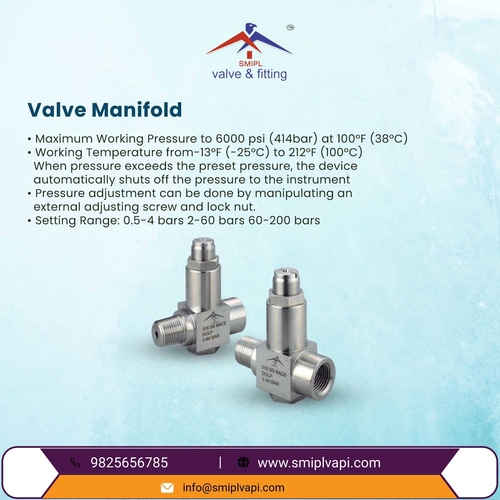
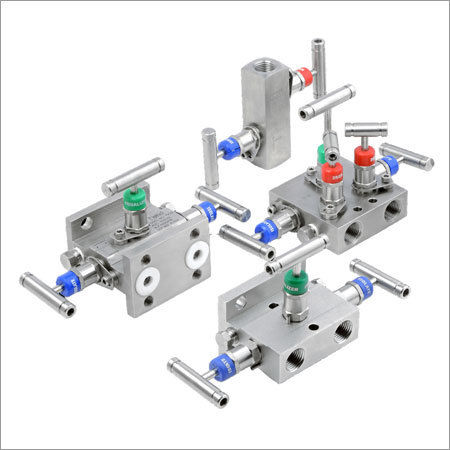
A manifold valve is a crucial component used in various industries to control the flow of fluids or gases. It acts as a junction point for multiple pipelines, allowing for the distribution, regulation, and isolation of different channels. Manifold valves are typically made of durable materials like stainless steel or brass, and they feature multiple ports or outlets, each equipped with individual valves for precise control and management of fluid flow. These valves play a vital role in optimizing system performance and facilitating efficient fluid distribution.
Frequently Asked Questions (FAQ):
Q: What is the purpose of a manifold valve?
A: The main purpose of a manifold valve is to provide control and distribution of fluid or gas flow in a system with multiple pipelines or channels. It allows for precise regulation and isolation of each channel, ensuring efficient fluid management and optimization of system performance.
Q: In which industries are manifold valves commonly used?
A: Manifold valves find applications in various industries such as oil and gas, chemical processing, manufacturing, water treatment, HVAC (heating, ventilation, and air conditioning), and many others. They are utilized in systems where the control and distribution of fluid or gas flow are critical.
Q: What are the key features of a manifold valve?
A: Manifold valves typically feature multiple ports or outlets, each with an individual valve for independent control. They are made of durable materials to withstand the pressures and conditions of the specific application. Manifold valves may also have additional features such as pressure gauges, temperature sensors, or built-in filters depending on the requirements of the system.
Q: Are manifold valves customizable?
A: Yes, manifold valves can be customized to meet the specific needs of an application. They can be designed with different port configurations, valve types (such as ball valves or needle valves), and sizes to accommodate various flow rates and pressures. Customization allows for tailored solutions that align with the unique requirements of the system.
Q: How do manifold valves provide control and isolation?
A: Manifold valves provide control and isolation by allowing the opening and closing of individual valves for each channel. This enables precise regulation of fluid or gas flow, as well as the ability to isolate a particular channel when necessary, without affecting the other channels connected to the manifold.
Q: Can manifold valves handle different types of fluids and gases?
A: Yes, manifold valves are designed to handle a wide range of fluids and gases, including water, oil, chemicals, compressed air, and more. The materials of construction and valve components are chosen to be compatible with the specific media being conveyed, ensuring proper functioning and longevity of the valve.
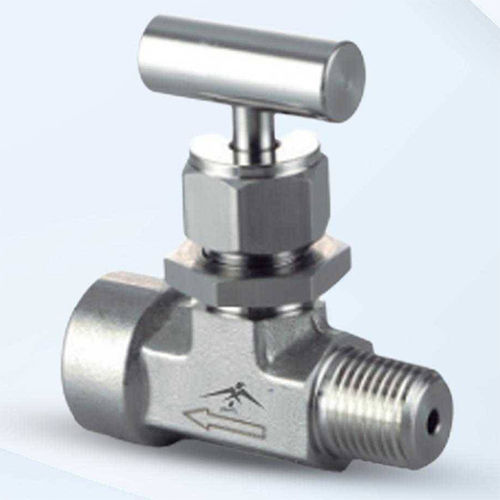
Precision Engineering for Process ControlThis 3-Way Manifold Valve is engineered for critical applications requiring accurate pressure and flow management. Its stainless steel 316 construction ensures long-lasting performance, even under high pressure and extreme temperatures. The valve's design meets globally recognized ASTM and ANSI B16.34 standards, making it suitable for demanding industrial environments.
Bubble-Tight Shut-Off and Versatile CompatibilityWith bubble-tight leakage performance and compatibility with various media such as gas, liquids, steam, and oil, this manifold valve offers robust reliability. The combination of PTFE/Graphite packing, passivated surfaces, and electro polished finishing ensures minimal maintenance while retaining its functionality over time.
Efficient and Flexible InstallationDesigned for both panel and pipe mounting, the manifold valve is easy to install in multiple system configurations. The compact, threaded body with 1/2 inch NPT female port size saves space while allowing for simple connection. The manual control system and field-replaceable seats and seals streamline both operation and maintenance.
FAQ's of Manifold Valve:
Q: How is the 3-Way Manifold Valve installed in process control systems?
A: The valve supports both panel or pipe mounting and uses a 1/2 inch NPT female threaded end connection, allowing quick installation in diverse system setups. Its compact design makes it especially suitable for space-constrained instrumentation panels.
Q: What benefits does the stainless steel 316 construction provide?
A: Stainless steel 316 ensures exceptional corrosion resistance, longevity, and reliability for high-pressure and corrosive environments. This material choice offers durability and consistent operation, particularly important in industrial applications.
Q: When should the seats and seals be replaced, and can this be done in the field?
A: If leakage or performance issues are detected, seats and seals can be field replaced, enabling minimal downtime and cost-effective maintenance. Routine inspection based on application intensity is recommended for optimal operation.
Q: Where can this manifold valve be used effectively?
A: This valve is ideal for industrial instrumentation, pressure measurement, flow control systems, and process automation involving gas, steam, oil, or liquid media. Its robust design allows use in both manufacturing and processing plants.
Q: What is the process for ensuring leak-tight performance?
A: Each valve undergoes 100% factory pressure testing, ensuring bubble-tight shut-off up to 6000 PSI. The needle-type disc and precision machining further enhance sealing and operational reliability.
Q: Can the manifold valve operate at high temperatures?
A: Yes, the valve is designed to withstand temperatures ranging from -29C up to 240C, making it versatile for a wide range of thermal environments across industries.

 Send Inquiry




 Send Inquiry

 Send Inquiry